
Mold Removal From Start to Finish
Mold Remediation Specialists
Mold Remediation experts of Orange County. Serving commercial and residential properties.
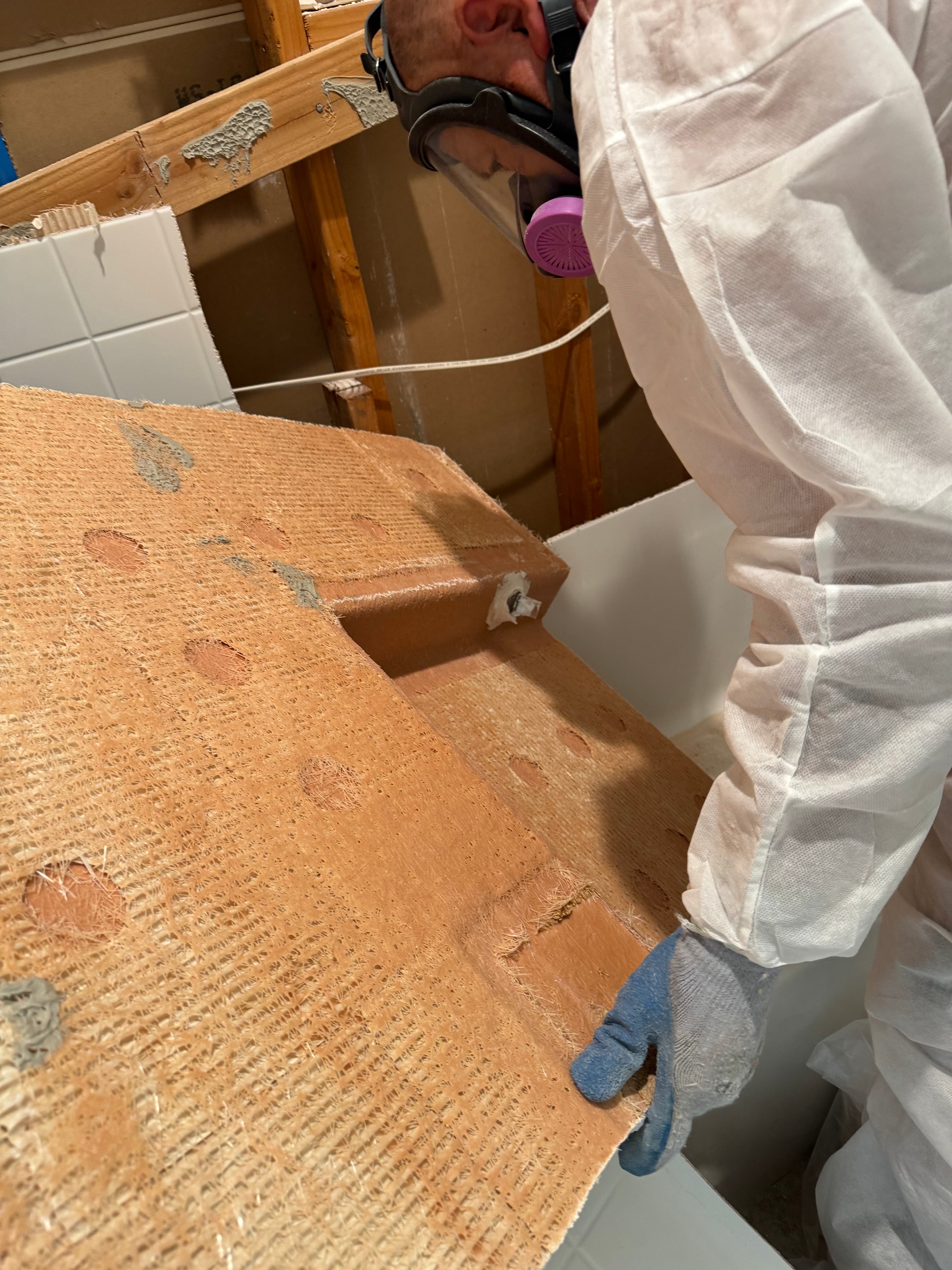
Got a mold problem?
The Right Fix Starts With the Right Assessment
ANSI/IICRC S520 is the standard for professional mold remediation. It addresses procedures such as containment, removal, cleaning, and post-remediation verification. Our team evaluates the affected materials and moisture conditions, explains the proposed scope, and plans repairs and reconstruction around the needs of your property.
What to Expect From Your Mold Assessment
Visual Inspection
We examine accessible areas for visible growth, staining, water damage, and conditions that may be contributing to the problem.
Moisture Checks
We check moisture conditions around the affected area to help identify where further investigation or drying may be needed.
Testing When It Adds Value
Mold testing is not automatically needed for every concern. We explain when sampling could provide useful information and why we recommend it.
Findings and Next Steps
We explain our findings, discuss the recommended work, and review the proposed scope and estimate before remediation begins.
Learn more about our mold inspections.
Our Remediation Process
The Difference Between Mold Removal and Remediation
Mold removal is one part of remediation. Remediation includes containing the work area, removing or cleaning affected materials, and addressing moisture conditions that support growth. Mold spores occur naturally indoors and outdoors, so eliminating every spore from a building is not realistic. The goal is to address unwanted growth and moisture problems, then verify that the completed work meets the project's remediation criteria.
Containment
Affected areas are isolated to prevent mold spores from spreading to unaffected parts of the property.
Air Filtration
HEPA filtration and air-scrubbing equipment capture airborne particles and reduce contamination throughout the remediation process.
Mold Removal & Cleaning
Heavily contaminated porous materials are removed when necessary, and affected structural surfaces are thoroughly cleaned.
Contents & Final Cleanup
Furniture, belongings, and other contents are evaluated based on material type and contamination level, followed by a final cleaning of the remediation area.
local mold removal• Irvine, CA
Kitchen Island Mold Remediation in Irvine
Step 1 of 6
Assessment
Project scope
A look behind the dishwasher revealed visible mold on the wallboard, but the damage didn't stop there. Our team also detected elevated moisture in the sink base cabinet to the right and moisture in the wood panels along the back of the cabinetry. The sink cabinet's base plate and right-side panel showed water damage, giving us a clearer picture of the areas that needed attention.
Step 2 of 6
Containment
Project scope
Our team enclosed the kitchen island with plastic sheeting to separate the work area from the surrounding kitchen. Negative air pressure was established and maintained inside the enclosure throughout remediation to help limit the spread of dust and mold particles.
Step 3 of 6
Material removal
Project scope
Our team removed and set aside the garbage disposal and plumbing connections, while salvaging the sink cabinet's doors and face frame. The rear wood panels were removed, cleaned, and saved. We removed and discarded the cabinet's internal base plate and side panels, along with approximately six linear feet of wallboard behind the sink and dishwasher, extending three feet above the floor. The countertop remained in place, supported by temporary wood framing.
Step 4 of 6
Cleaning and drying
The photograph illustrates equipment in the work area; it does not depict every cleaning action described in the scope.
Project scope
Our team wire-brushed the exposed wood wall framing to remove surface contamination, then treated the opened area with an antimicrobial solution. We cleaned the containment surfaces and prepared the area for clearance inspection.
Step 5 of 6
Clearance inspection
Project scope
Air samples from the kitchen containment were analyzed by a third-party laboratory and compared with outdoor baseline samples. A post-remediation inspection checked all work areas for visible mold, dust, and debris, while the wood framing was tested for excess moisture before clearance for reconstruction.
Step 6 of 6
Reconstruction
Project scope
We installed approximately 18 square feet of new wallboard behind the dishwasher and sink cabinets, then rebuilt the cabinet base plate and side panels with matching materials where needed. The original face frame and doors were reinstalled, and the under-sink plumbing was reconnected.
Mold Remediation Projects We've Completed
See how Coastal has handled mold damage in Orange County properties, from isolating affected areas to completing repairs.

Huntington Beach, CA
Kitchen Mold Remediation
Problem: An unnoticed supply-line leak beneath the kitchen sink led to mold on the cabinet base and nearby drywall.
Our Work: The team set up containment and removed the mold-damaged materials.
Outcome: Coastal completed repairs to return the kitchen to its condition before the damage.
Want to understand how mold gets into kitchen cabinets in the first place? Read our blog post: Mold Under Kitchen Cabinets.
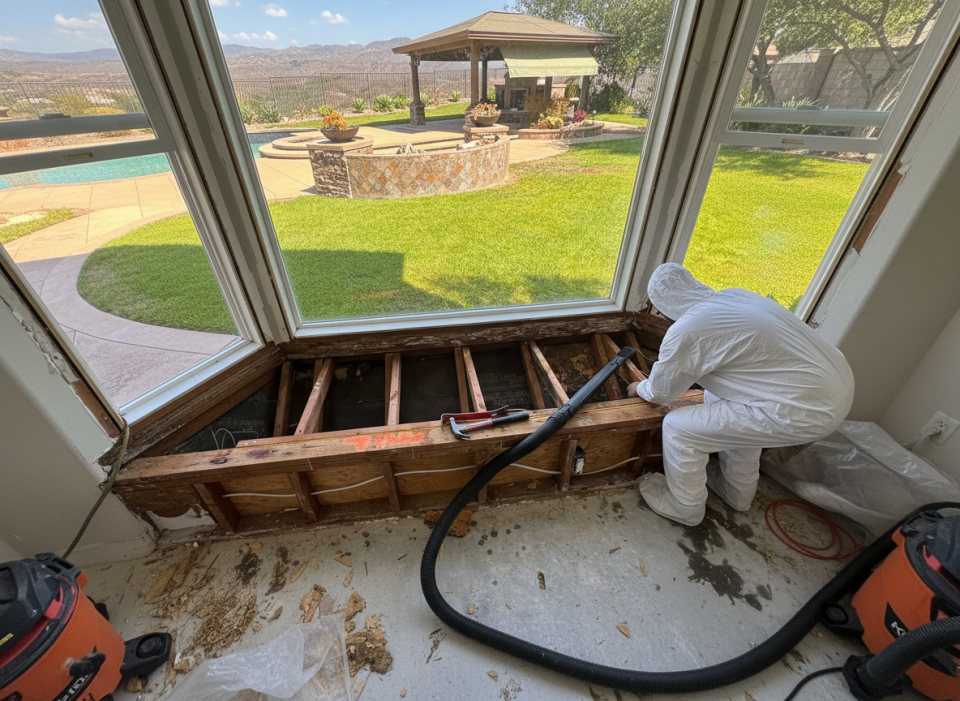
Irvine, CA
Window Seat Mold Remediation
Problem: Discoloration and a musty smell prompted an Irvine homeowner to investigate mold beneath a window seat.
Our Work: Coastal removed damaged framing and substrate, treated the adjacent structure, and restored the affected area.
Outcome: Post-remediation clearance testing confirmed the cleanup.
From Mold Removal to Finished Repairs
Mold removal can leave sections of drywall, flooring, or cabinetry needing repair. Coastal Risk Management can handle the reconstruction that follows, giving you one team to work with through remediation and the rebuild.
Depending on the project, this may include:
- Drywall and insulation replacement
- Flooring and baseboard repairs
- Cabinetry repairs or replacement
- Painting and interior finish work
Know what you're dealing with
Types of Mold We Treat
Different molds can grow in damp buildings, particularly in vulnerable spaces like attics and basements. While identifying the exact type isn't always necessary before remediation, understanding potential health risks is important. Exposure to specific mold species—such as Stachybotrys, Cladosporium, and Aspergillus—can trigger allergic reactions, respiratory issues, coughing, and eye irritation in sensitive individuals. Our assessment focuses on the moisture source, affected materials, and extent of growth to safely mitigate these risks.
Stachybotrys chartarum
Often called "black mold," Stachybotrys chartarum thrives on persistently wet cellulose materials like drywall paper and fiberboard. It is one of the slower-growing molds and typically indicates a long-standing moisture problem.
Aspergillus spp.
Aspergillus is one of the most common indoor molds, appearing in a wide range of colors. It grows readily on dust, building materials, and HVAC systems, and is frequently found after water damage events.
Penicillium spp.
Penicillium spreads quickly on water-damaged materials including insulation, carpet, and wallboard. Its blue-green colonies are a common indicator of moisture intrusion and can spread rapidly to adjacent areas.
Cladosporium spp.
Cladosporium is among the most widespread outdoor and indoor molds. It commonly colonizes window sills, HVAC ducts, and damp surfaces, and can trigger respiratory symptoms in sensitive individuals.
Common Questions
Frequently Asked Questions
Have a question not covered here? Visit our full FAQ page for more answers.