
Mold Under Kitchen Cabinets: Causes, Removal & Prevention
Learn what causes kitchen cabinet mold, which components may be saved, and what to expect from remediation and repairs in Orange County.

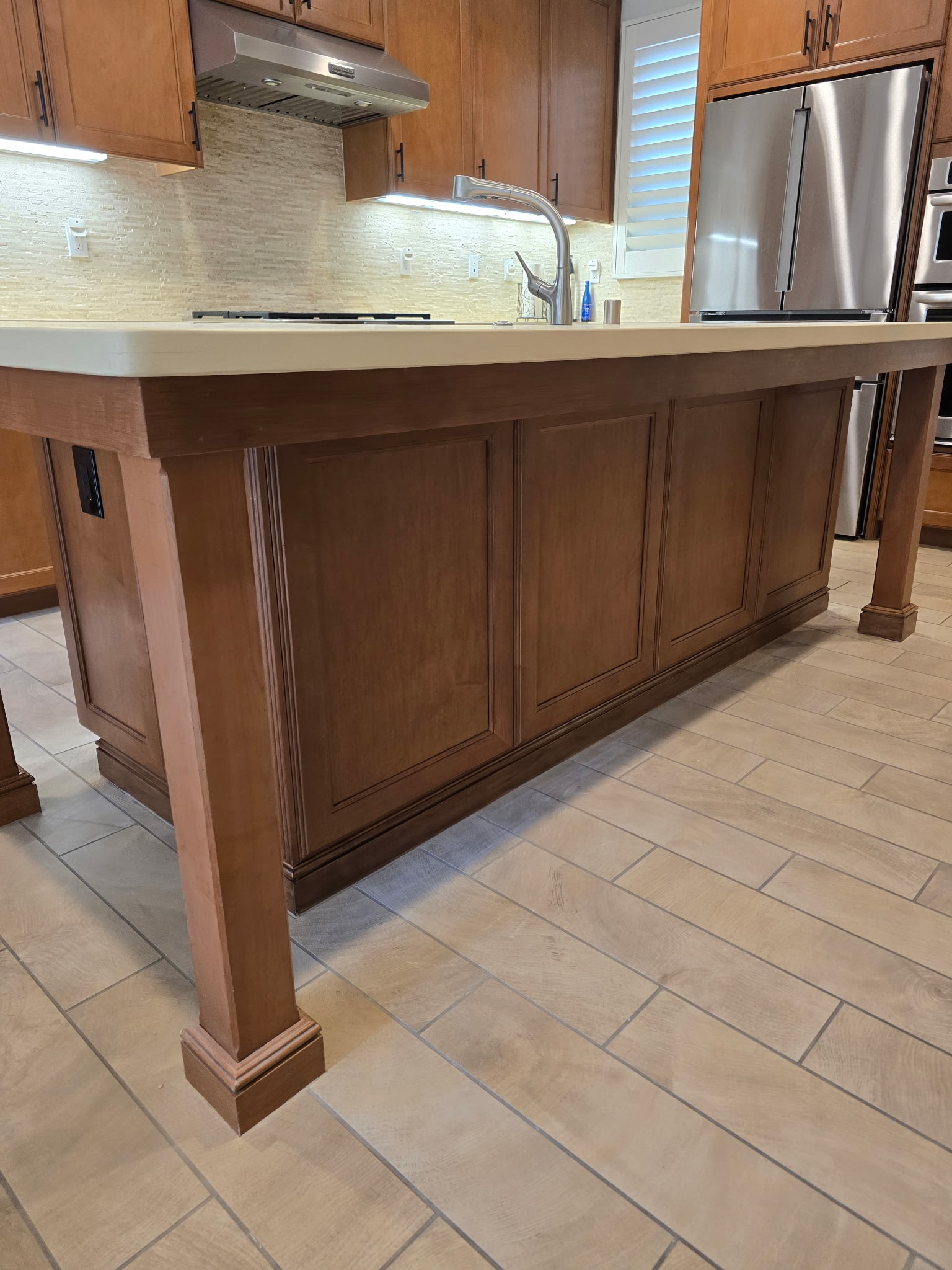
Preventing mold under kitchen cabinets starts with stopping leaks, finding concealed moisture, and drying affected materials — not simply wiping away discoloration. When damage is already present, our assessment helps determine what can be cleaned, what needs removal, and how to prevent recurrence. Coastal Risk Management provides Orange County homeowners with assessment, remediation, and reconstruction services built around addressing the source.
What causes mold under kitchen cabinets?
Mold develops beneath or behind cabinets when moisture remains on materials that support growth, including wood and paper-faced drywall. The water may come from sink plumbing, a dishwasher, condensation, or concealed plumbing leaks. Cabinet interiors can hide the problem, allowing dampness to persist beyond the surfaces you can easily inspect.
Sink leaks and everyday water intrusion
Mold under kitchen sink cabinets deserves attention because a leak can affect both the cabinet base and adjacent wall materials. In our documented Huntington Beach kitchen project, an unnoticed supply-line leak led to mold on the cabinet base and nearby drywall. This example illustrates why finding and repairing the leak matters as much as addressing the visible damage.
Dishwasher leaks and concealed plumbing
Dishwasher leaks can originate at door seals, supply connections, drain hoses, or internal components. Water appearing beside the appliance may therefore require more investigation than replacing a door gasket. Stop using a leaking dishwasher until the source is corrected rather than repeatedly drying the surrounding floor.
Concealed plumbing leaks can also leave moisture inside walls around pipes. If you suspect mold behind kitchen cabinets, avoid pulling apart the installation yourself: disturbing hidden growth can release spores.
Which signs warrant a professional mold assessment?
Visible damage, persistent musty odors, and recurring moisture warrant professional assessment, especially after a known leak. Staining, odors, and moisture readings do not by themselves establish the cause or full extent of a problem. Visible mold growth warrants attention, and testing is not automatically needed before cleanup. An assessment should investigate the moisture source and affected materials rather than diagnose the problem from one photograph.
Look for and document these indicators:
- Visible changes: unexplained spots, discoloration, peeling finishes, or damaged wall surfaces.
- Cabinet deterioration: swollen panels, separating veneer, warped sections, or softened material.
- Persistent odors: a musty smell concentrated beneath the sink or beside an appliance.
- Recurring moisture: puddles, damp cabinet bases, condensation, or wet items stored inside.
- Previous water damage: a repaired leak with lingering damage or uncertainty about whether concealed materials dried.
Do moldy cabinets need to be replaced?
Not always. The decision depends on material type, structural condition, contamination, and whether every affected surface can be accessed, cleaned, and dried. Water-damaged kitchen cabinets should be evaluated component by component rather than automatically saved or removed as a complete set. EPA guidance distinguishes between materials that can be cleaned and those that require disposal.
Preservation requires sound, accessible materials
A preservation plan should explain how the contractor will reach concealed surfaces and confirm that retained materials are dry. Saving a finished cabinet front accomplishes little if contaminated material remains inaccessible behind it. Our approach focuses on removing damaged materials when necessary while preserving components that can be safely cleaned and restored.
Before remediation begins, we ask ourselves three important questions: what stays in place, what needs temporary removal for access, and what requires disposal. That distinction matters when reviewing an estimate. Removal for access should not be confused with a finding that every removed component is beyond repair.
Removal addresses damage that cleaning cannot solve
Swollen particleboard and fiber cores can sustain permanent damage after water exposure. Cleaning does not reverse that swelling or restore the original material condition. Likewise, mold in porous materials may be difficult or impossible to remove completely, making replacement appropriate even when the visible staining looks limited.
The practical goal is neither maximum demolition nor preservation at any cost. Ask for a material-specific explanation: is removal necessary because the component cannot be cleaned, because it is physically damaged, or because it blocks access? We provide clear answers that help you understand the scope and compare proposals fairly.
Countertops need a separate decision
Do not assume a countertop must be discarded because the cabinets below it need work. Equally, do not assume it can remain undisturbed while the supporting installation is changed.
Request separate recommendations for the countertop surface, any attached backing, and the cabinetry beneath it. Material differences matter because nonporous surfaces can generally be cleaned more effectively than mold-affected porous materials. The preservation decision should account for the whole assembly, not just its appearance from above.
What does kitchen mold remediation involve?
A useful remediation plan explains the sequence of work and the conditions required before rebuilding begins. At Coastal, we address moisture correction, protection of unaffected areas, material decisions, cleanup, and verification. EPA guidance emphasizes planning before removal and revising the plan when hidden damage is discovered.
-
Assessment and source identification. We evaluate visible damage, moisture conditions, and the likely extent of affected materials. Ask which plumbing or appliance repairs must happen before the area can remain dry.
-
Containment and air control. Appropriate barriers separate the work area from unaffected spaces. Depending on the scope, HEPA filtration and controlled airflow help limit the movement of particles during removal.
-
Selective removal and cleaning. Materials that cannot be restored are removed, while suitable retained surfaces are cleaned. The scope should identify the cabinet sections, wall materials, or other components involved rather than use an unexplained instruction to "treat the kitchen."
-
Drying and verification. Before reconstruction, our team checks that the moisture source has been corrected and remaining materials are dry, appropriately cleaned, and free of visible mold and mold odor. Testing may be included when justified, but a single air sample is not a substitute for evaluating the underlying conditions. (California Department of Public Health — Mold FAQ)
-
Reconstruction and handoff. Repairs follow the completed remediation and drying work. We offer reconstruction involving cabinetry, drywall, flooring, and finishes, allowing the repair scope to be coordinated with the earlier removal decisions. Ask for a final walkthrough and copies of the project documentation.
Irvine kitchen project: selective removal and reconstruction
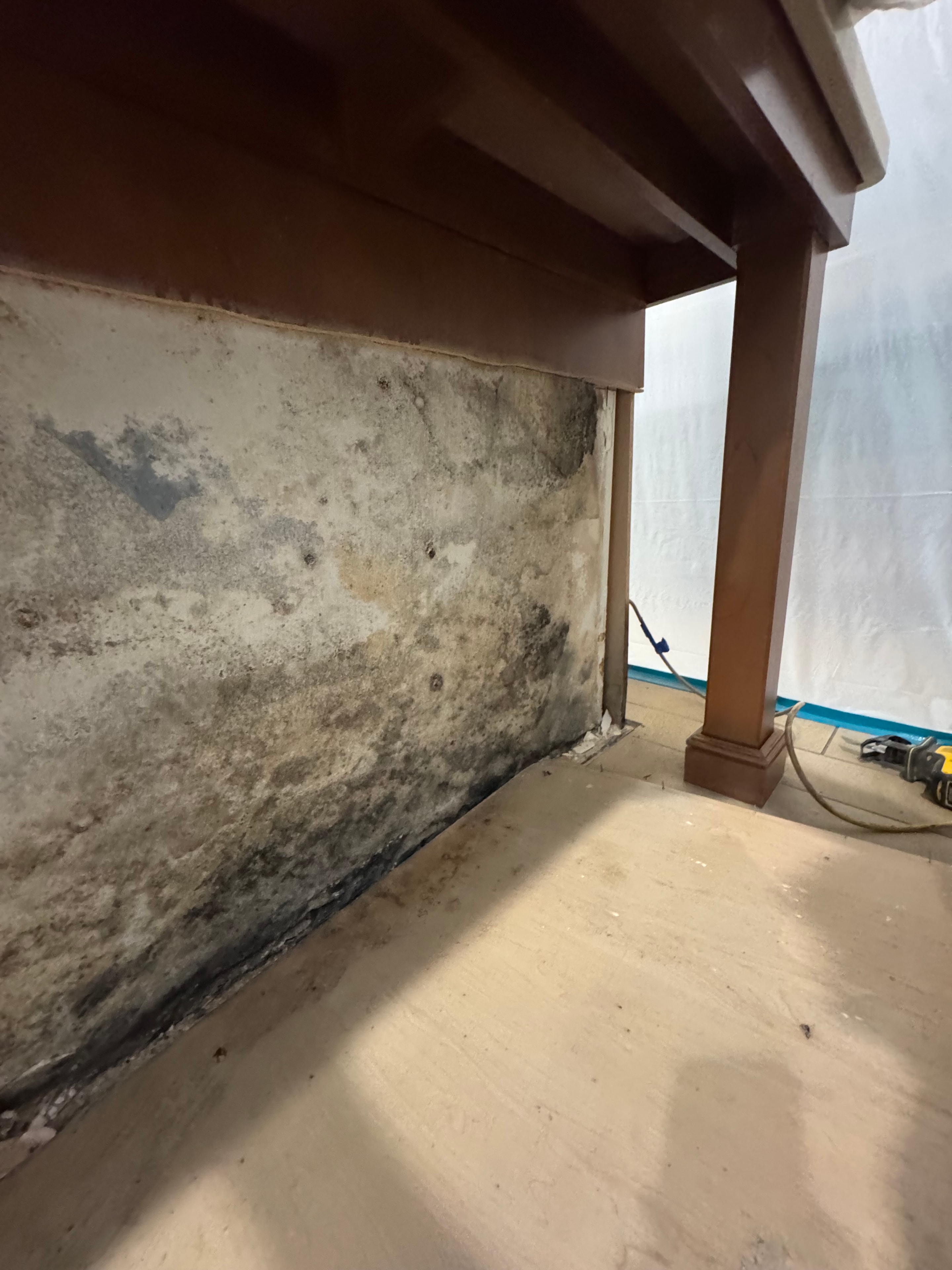
At an Irvine kitchen island, Coastal found visible mold on wallboard behind the dishwasher and elevated moisture in the adjacent sink cabinet. The team removed the damaged cabinet base plate, side panels, and affected wallboard while preserving the countertop with temporary support.
The cabinet doors, face frame, and suitable rear panels were saved. Following cleaning and verification, Coastal rebuilt the damaged sections and reinstalled the retained components. This project illustrates why cabinetry should be assessed component by component: what can be preserved depends on the materials and conditions at each property.
View our Irvine kitchen mold remediation project to see the assessment, removal, and reconstruction work.
Cost and scheduling depend on the actual scope
Budgeting should begin with an assessment rather than a generic price per cabinet. We identify the affected area, material type, contamination, and moisture conditions as factors influencing remediation cost and duration. An on-site assessment helps establish the work required and provides the basis for a project-specific estimate.
Request an itemized proposal addressing:
- Investigation and access: what must be opened or disconnected to establish the extent of damage.
- Remediation: containment, cleaning, removal, disposal, and drying included in the scope.
- Verification: the inspection, moisture documentation, and any proposed sampling.
- Preservation work: evaluation, protection, storage, or reinstallation of retained components.
- Reconstruction: replacement materials, installation, finishes, and responsibilities for reconnecting fixtures.
Prevention habits that make moisture easier to catch
The strongest prevention strategy is to correct water problems promptly and avoid leaving materials damp. EPA recommends drying water-damaged areas within 24–48 hours to help prevent mold growth. That guidance is a reason to act quickly — not a guarantee that any particular wet cabinet will remain mold-free. (EPA mold and moisture guidance)
Build a routine around the places where water is used:
- Keep inspection points accessible. Arrange under-sink storage so you can see the cabinet base and plumbing connections. Remove stored items periodically to check the back corners.
- Respond to changes immediately. Photograph new dampness, identify when it occurs, and arrange repairs rather than covering stains with shelf liner or paint.
- Maintain the dishwasher. Follow the manufacturer's instructions for detergent, loading, filter care, and seals. Have persistent leaks investigated instead of continuing to run the appliance.
- Control humidity and condensation. Use kitchen exhaust ventilation and address moisture collecting on pipes or nearby surfaces. EPA recommends keeping indoor relative humidity below 60%, ideally between 30% and 50%. (EPA mold and moisture guidance)
- Recheck repaired areas. After cleanup, look for returning moisture, odors, or visible changes. A recurrence deserves investigation rather than another cosmetic treatment.
If mold is already suspected, avoid directing household fans across affected materials or starting uncontrolled demolition. Disturbance can spread contamination, and painting over mold does not resolve the source. Get guidance on the appropriate cleanup approach before trying to conceal or dry the problem yourself.
Address the source before replacing the finish
Mold prevention and restoration work best when moisture correction comes first. The right plan explains what can remain, what needs removal, and how the area will be checked before rebuilding. Replacing a cabinet without resolving the water problem leaves the underlying issue unaddressed. (California Department of Public Health — Mold FAQ)
For mold remediation in Orange County, we offer source-focused cleanup and coordinated reconstruction. Contact us to schedule an assessment and discuss the damage, preservation options, and next steps for your kitchen.
Sources
- U.S. Environmental Protection Agency — A Brief Guide to Mold, Moisture and Your Home
- California Department of Public Health — Frequently Asked Questions about Mold
Have questions about water damage, mold, or restoration? Our team is available to assess your property and answer your questions.
Request an AssessmentExplore Topics
Written by
Coastal Risk Management
IICRC-certified water damage restoration and environmental remediation specialists serving Orange County for over 25 years.