
COMMERCIAL & HIGH-VALUE WATER LOSS SOLUTIONS
Structural Pasteurization for Commercial Water Loss & High-Value Properties
Dry structures quickly while preserving valuable materials, finishes, and business operations. Our Top-Down Drying process can reduce demolition and downtime in commercial properties, luxury homes, custom cabinetry, hardwood flooring, and other difficult-to-replace spaces.
The Science
What Is Structural Pasteurization?
(Top-Down Drying)
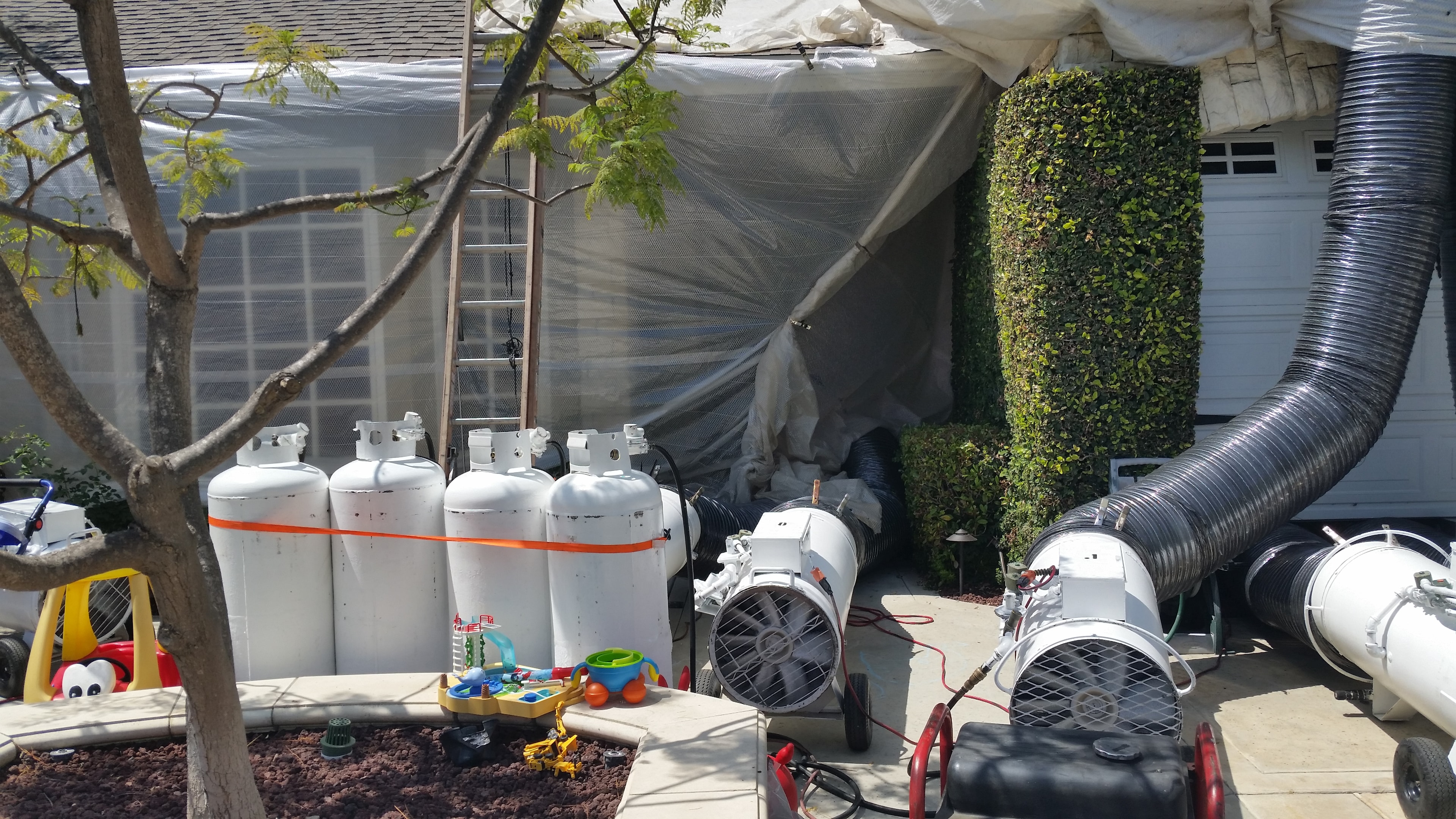
Structural Pasteurization uses controlled convective heat, pressure, airflow, and dehumidification to move trapped moisture out of walls, flooring, concrete assemblies, framing, and other affected building materials.
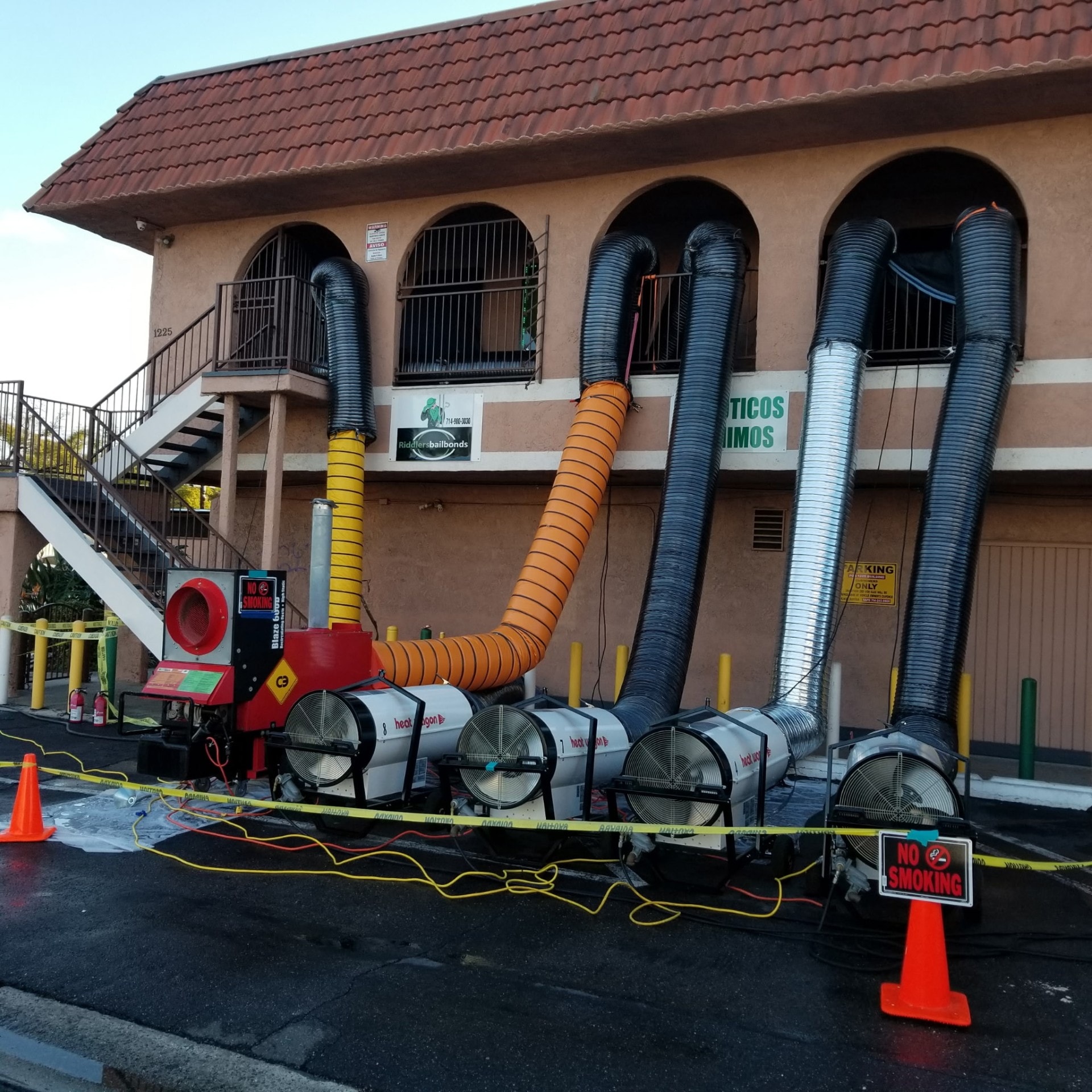
A two-story commercial building undergoing structural pasteurization after a large leak affected both levels.
Engineered Heat
Engineered high temperatures (110–150°F) inside the structure raise vapor pressure inside wet materials, evaporating trapped moisture much faster.
High-Volume Airflow
Precision airflow channels the released moisture away from walls, flooring, and framing as it migrates outward.
Dehumidification
High-capacity dehumidifiers extract the airborne moisture, completing the drying cycle with minimal structural disruption.
For Properties, Materials & Spaces Worth Protecting
Advanced Drying for Complex Restoration Needs
Structural Pasteurization & Advanced Structural Drying is designed for situations where conventional restoration could lead to excessive demolition, extended downtime, or the loss of valuable materials. It can be especially effective in large commercial facilities, luxury residences, historic buildings, and properties with custom cabinetry, specialty flooring, murals, architectural details, or other finishes that are difficult to replace.
Large Commercial Buildings
Schools, offices, entertainment facilities, multifamily properties and other large structures where prolonged closures can create substantial disruption.
Luxury Homes
High-value residences where custom finishes and materials make unnecessary demolition especially costly.
Historic Buildings
Structures containing original materials, craftsmanship or architectural details that may be difficult or impossible to recreate.
Custom Cabinetry & Millwork
Built-in cabinets, decorative woodwork and custom installations that can be expensive and time-consuming to replace.
Hardwood & Specialty Flooring
Properties containing premium flooring systems where preservation may be preferable to removal when conditions safely allow.
Murals & Architectural Finishes
Decorative finishes, specialty plaster, murals and other features where destructive access could permanently alter the property.
Minimize Downtime
Keep Your Business Moving.
For commercial properties, the biggest cost of water damage is often the disruption that follows. Extensive demolition can shut down workspaces, delay operations and turn a drying project into weeks of reconstruction. Top-Down Drying helps businesses recover faster by drying affected materials in place when conditions allow, reducing unnecessary tear-out and helping facilities return to normal business activities with less interruption.
30–50%
Lower Claim Costs
for Properties
Affected by
Water Damage
real cases
Specialized Solutions for Commercial Losses
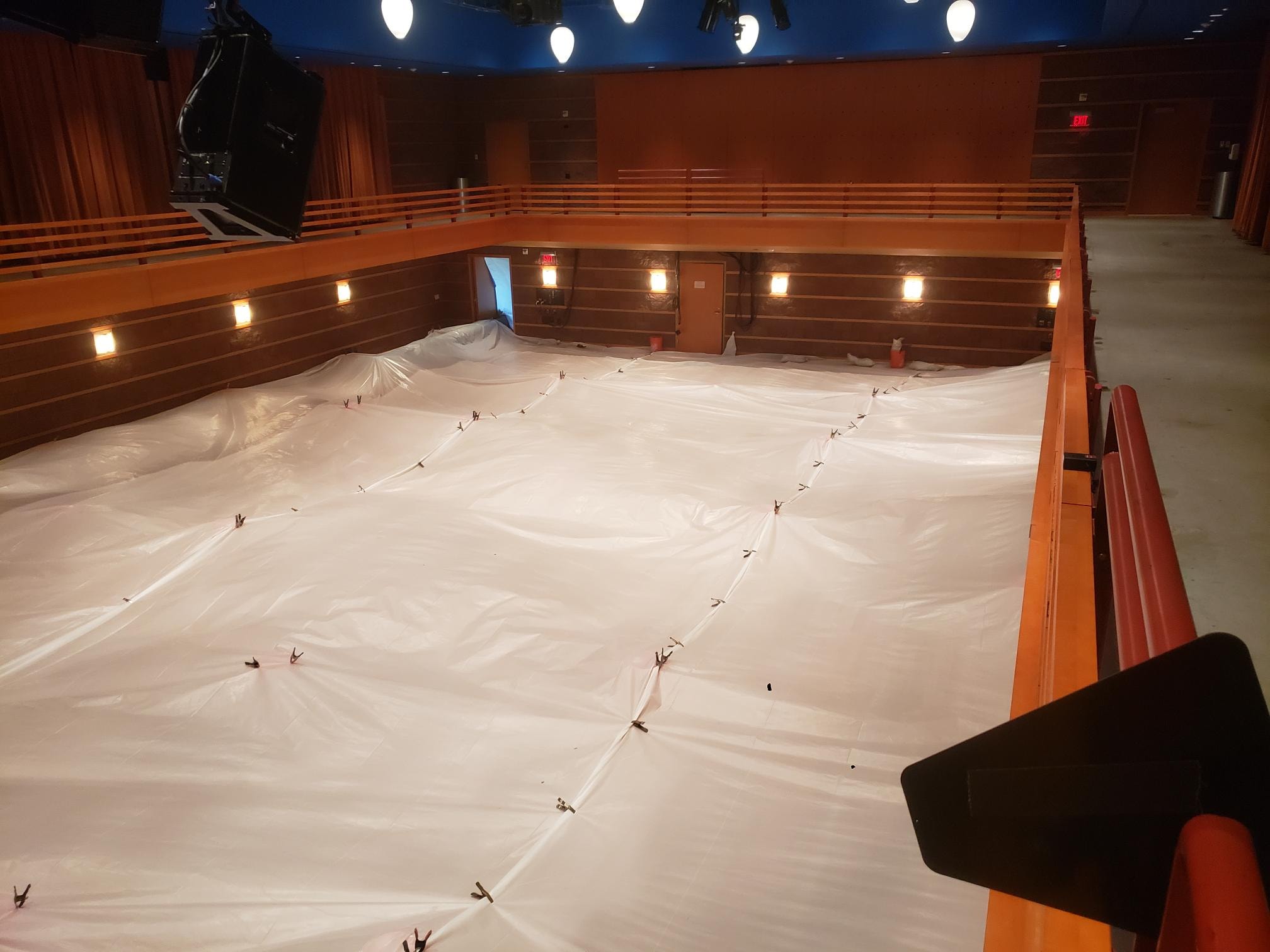
Segerstrom Center for the Arts
Costa Mesa, CA
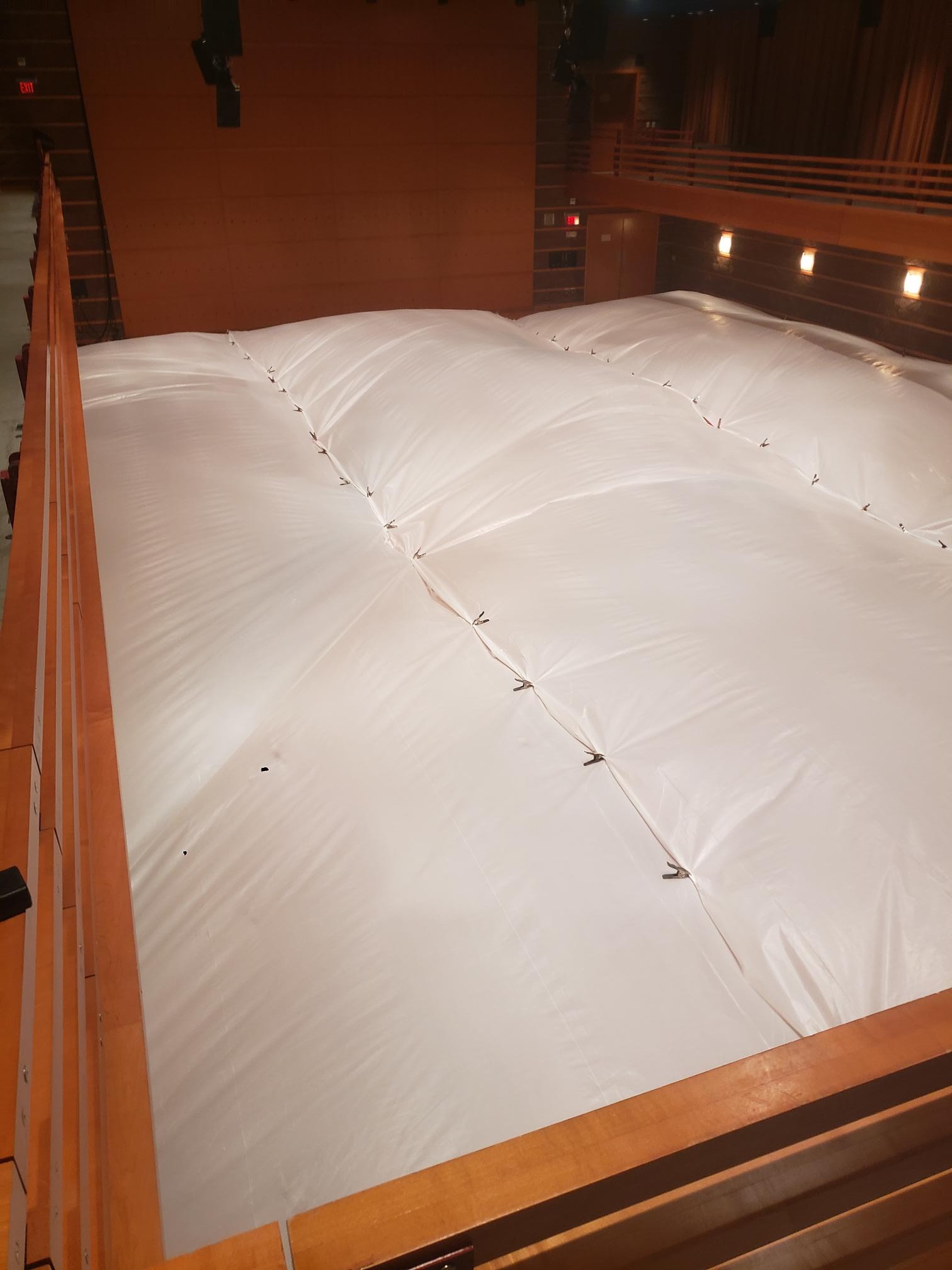
When a soda machine leak affected the performance hall at Segerstrom Center for the Arts, the priority was to dry the moisture trapped beneath the floor and avoid costly removal, allowing the venue to return to normal operations as quickly as possible.
Coastal deployed a Top-Down Drying approach to address moisture within the structure without needing to tear out any of the flooring.
The project allowed the facility to avoid the extended downtime that a conventional tear-out and reconstruction approach would have required (3–4 weeks). Using the structural drying process, the affected area reached dry standard within four days.
A Specialized Solution for an Orange County Preschool
Orange County, CA
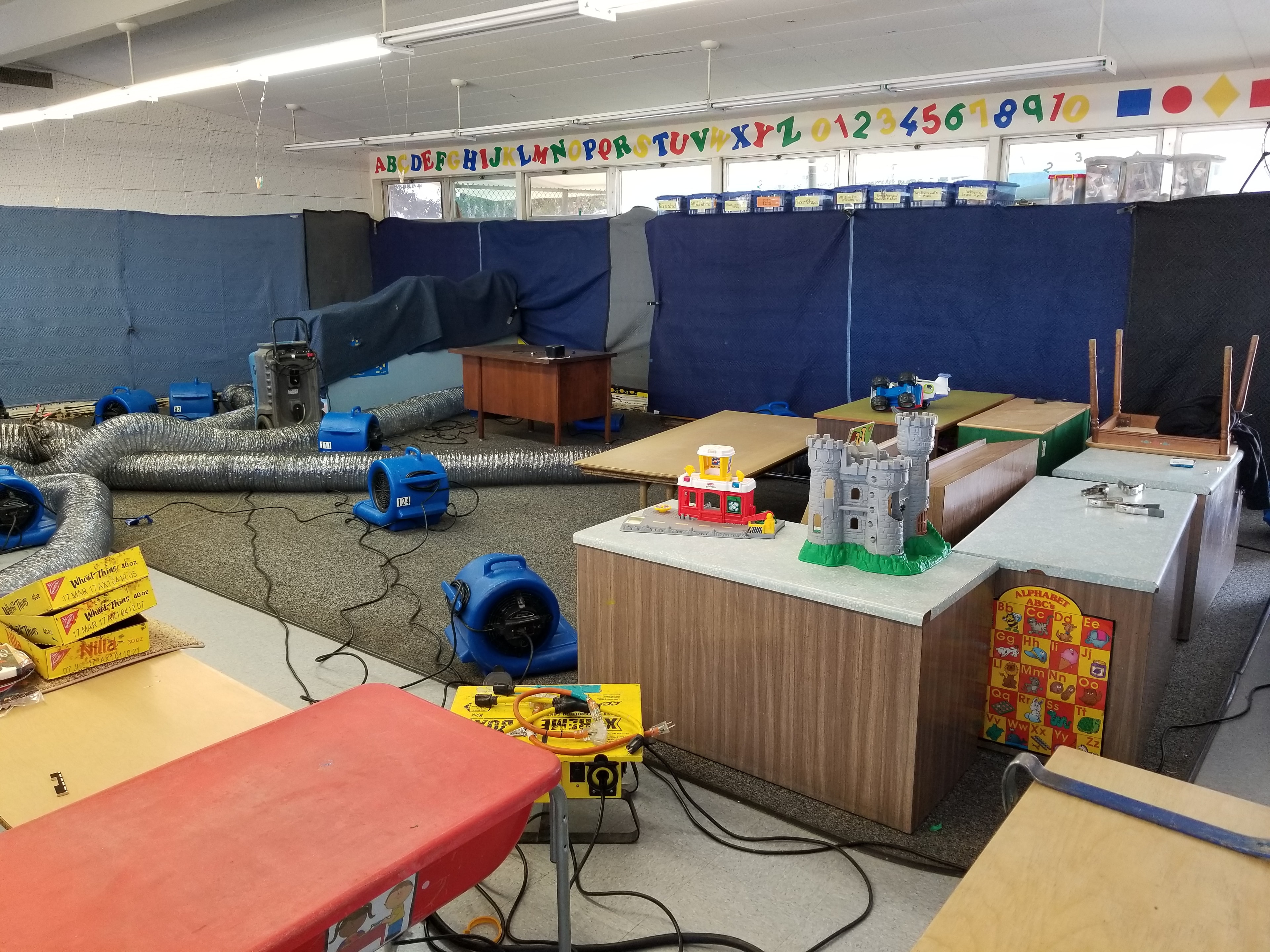
When water damage occurred at an Orange County preschool, the presence of asbestos-containing materials in the building created a significant complication. Conventional drying methods would have required demolition, triggering a full asbestos abatement process and an extended facility closure.
Coastal used Top-Down Drying to address the moisture without disturbing the asbestos-containing components. By drying the structure in place, the project avoided the need for abatement-driven demolition.
The approach allowed the preschool to reopen in 3 days instead of 3 weeks.
Side-by-Side Comparison
Conventional vs. Advanced Structural Drying
Conventional Drying
Common Limitations
- Surface-level airflow only
- Demolition often required to access wet materials
- Extended reconstruction timeline
- Higher risk of material loss
- Longer facility downtime
Advanced Structural Drying
Key Advantages
- Engineered heat and pressure drive moisture from within materials
- Can reduce or eliminate demolition on qualifying projects
- Faster path back to normal operations
- Preserves more of the existing structure
- Less disruption to occupants and operations
Frequently Asked Questions
Structural Pasteurization is an advanced drying process that uses controlled heat, airflow and dehumidification to move moisture out of affected building materials. Rather than relying solely on surface airflow, the process is designed to address moisture held deeper within structural components.
No. It is most valuable for properties with high-value finishes, complex materials, or operational needs that make extensive demolition especially costly or disruptive. A Coastal technician will evaluate whether the approach is appropriate for your specific loss.
On qualifying projects, advanced structural drying can significantly reduce the overall restoration timeline compared to conventional demolition-and-rebuild approaches. Timelines vary based on the scope of the loss, the materials involved and the conditions of the structure.
In some cases, yes. When asbestos-containing materials are present, conventional drying methods that require demolition can trigger a full abatement process. A heat-based drying approach may allow the structure to be dried in place without disturbing those materials, potentially avoiding abatement-driven demolition. Each project is evaluated individually.
Yes. Coastal works with commercial facilities of all sizes, including offices, schools, entertainment venues, multifamily properties and other large structures where minimizing downtime is a priority.
Ready to Discuss Your Property?
Contact Coastal Risk Management to discuss whether advanced structural drying is the right approach for your water loss.